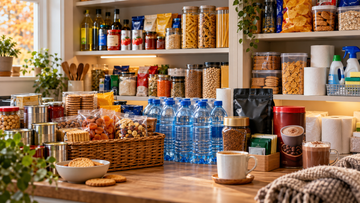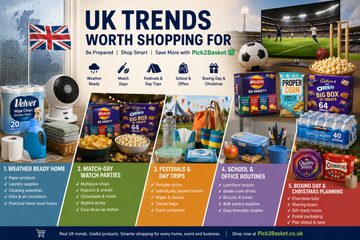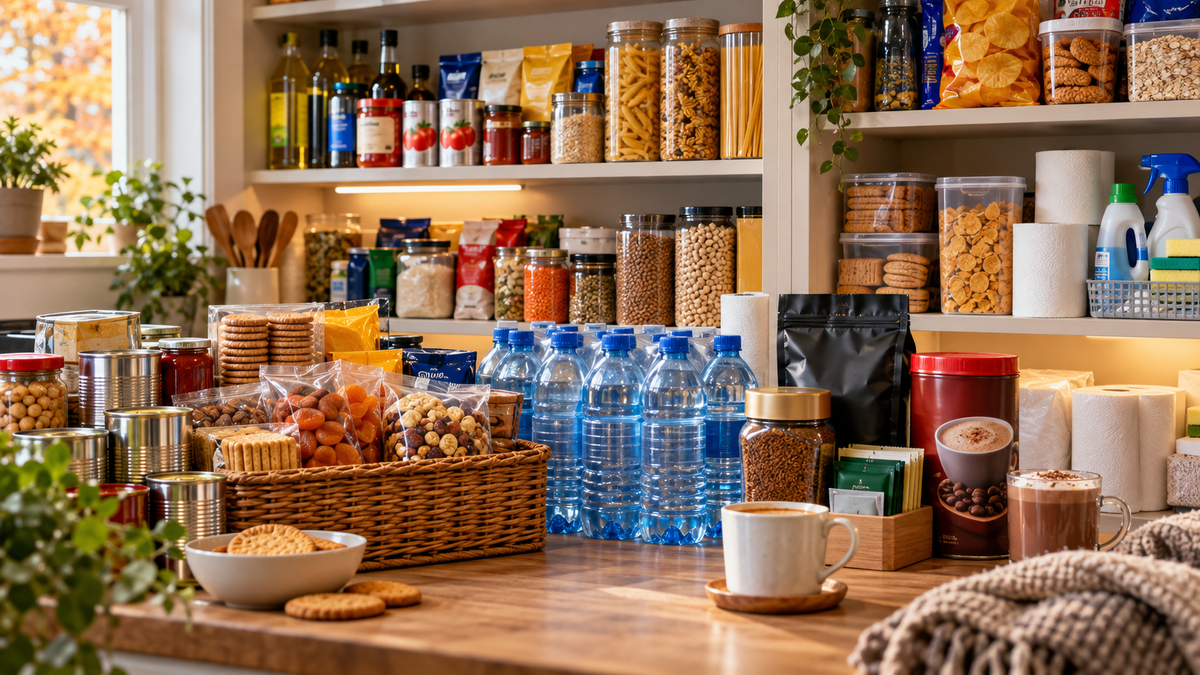
Wondering whether you should stock up on food in the UK? Keeping a sensible selection of food, drinks and household basics at home can make everyday life easier during busy weeks, colder weather, transport disruption or a short power or water interruption. However, preparing responsibly is very different from panic buying.
The best approach is to buy products your household already uses, build your cupboard gradually and rotate everything before it reaches the date shown on the packaging. You do not need to fill every shelf or purchase excessive quantities. A practical reserve should suit your household size, dietary requirements, storage space and normal routine.
This guide explains what to consider when building a useful autumn and winter cupboard, how to reduce waste and which everyday categories you can explore at Pick2Basket.
Important: This article provides general household-shopping information rather than live emergency advice. During an emergency, always follow instructions from emergency services, your local authority, utility providers and official UK Government guidance.
Why Are UK Households Thinking About Stocking Up on Food?
There are many ordinary reasons why people decide to keep a few extra essentials at home. Autumn and winter can bring colder weather, storms, local flooding, transport delays and occasional interruptions to utilities. Families may also want to reduce last-minute shopping trips, prepare for school holidays or organise food and drinks before Christmas.
A well-planned cupboard can be useful when:
- You cannot get to the shops for a day or two.
- A delivery is delayed.
- Bad weather makes travelling inconvenient.
- You have unexpected guests or family members visiting.
- Your workplace, café or small business needs dependable everyday supplies.
- You want to spread seasonal shopping across several weeks.
The aim is not to react to frightening headlines. It is to make sensible purchasing decisions based on what you will genuinely use.
Prepared, Not Panicked: The Right Way to Stock Your Cupboard
Before buying anything, check what is already in your kitchen, utility room and storage cupboards. You may already have more than you realise.
Write down:
- How many people live in your household.
- Which meals and drinks you consume regularly.
- Any allergies, intolerances or dietary requirements.
- Items required for babies, older relatives, pets or medical needs.
- How much dry and secure storage space you have available.
Use this list to fill genuine gaps. Avoid buying unfamiliar food simply because it has a long storage life. Products offer better value when your household will actually consume them.
A Practical UK Store-Cupboard Essentials Checklist
1. Bottled Water and Everyday Drinks
Water is one of the most important household considerations. The amount required will vary depending on household size, weather, age, health, pets and whether water is also needed for food preparation or hygiene.
The UK Government’s Prepare guidance provides current information about keeping bottled water at home and calculating individual household needs. It refers to approximately 2.5 to 3 litres of drinking water per person per day as a minimum reference, while explaining that additional water may be needed for cooking, hygiene, babies, pets and medical equipment.
Buy water gradually, store it as instructed on the packaging and rotate older packs into everyday use. There is no reason to clear supermarket shelves or order quantities that you cannot store safely.
Browse bottled water and drinks at Pick2Basket
2. Easy-to-Store Food You Already Enjoy
Your cupboard should contain a practical combination of meal ingredients and ready-to-eat products. Suitable choices depend on your diet, but may include:
- Tinned or packaged foods that your household regularly eats.
- Flour, grains and other everyday cooking ingredients.
- Nuts, dried fruit and similar cupboard snacks.
- Biscuits, crackers and individually packed products.
- Food that can be eaten without cooking.
- Products requiring only a small amount of preparation.
Do not rely entirely on snacks or confectionery. Build a balanced selection and include products suitable for your household’s dietary and nutritional needs. Always follow the storage and preparation instructions printed on each product.
Explore Pick2Basket Food Cupboard essentials
3. Coffee, Tea and Hot Chocolate for Colder Days
As autumn begins and temperatures fall, hot drinks become a regular part of many UK households and workplaces. Coffee, tea and hot chocolate can be useful everyday cupboard products because they are simple to store and suitable for family kitchens, staff rooms, cafés and hospitality settings.
Before buying a large pack, check how quickly it will be used. Coffee capsules should match your machine, while instant coffee and drinking chocolate must be stored securely in a dry area after opening.
A large pack can offer practical value for a busy household or office, but only when the contents will be consumed and stored correctly.
Shop coffee, capsules and hot chocolate
4. Convenient Snacks and Sharing Products
Individually wrapped snacks can be useful for lunchboxes, workplaces, guests, journeys and busy days. Biscuits, popcorn, crisps, nuts and chocolate can also add variety to a broader cupboard plan.
When comparing multipacks, consider:
- The number of people who will use them.
- The variety of flavours included.
- Dietary and allergen information.
- Available storage space.
- The dates and storage instructions shown on the box.
Treats can be included for convenience and enjoyment, but they should complement rather than replace normal meals.
Browse treats, snacks and sharing products
5. Food Containers and Kitchen Organisation
Good organisation helps prevent food waste. Secure food containers can help separate products, organise meal preparation and protect opened packets from moisture or accidental spills.
Use clearly labelled containers where appropriate, but retain the original packaging or important information such as ingredients, allergens, preparation instructions and dates.
Keep older products near the front of the cupboard and newer purchases behind them. This simple first-in, first-out method encourages you to use existing products before opening newer packs.
View Pick2Basket multipacks and bundle deals
6. Household and Hygiene Essentials
Food is only one part of a practical home checklist. Consider everyday household products that you would find inconvenient to run out of, including:
- Kitchen roll or absorbent cleaning roll.
- Toilet tissue and bathroom products.
- Wet wipes or appropriate hygiene products.
- Laundry detergent and fabric conditioner.
- Household cleaning supplies.
- Bin bags and basic storage materials.
Large packs may reduce the frequency of replacement orders, but only buy quantities that can be stored securely away from food, children and pets.
Shop household and cleaning essentials
Remember Babies, Pets, Allergies and Medical Needs
A general shopping checklist will not suit every household. Make a separate list for anyone with additional requirements.
This may include:
- Appropriate baby food or ready-to-use formula.
- Food that meets allergy or intolerance requirements.
- Pet food and drinking water.
- Regular medication and medical supplies.
- Products required by older or vulnerable household members.
Do not substitute products without checking professional advice. For medication, infant feeding or medical equipment, follow instructions from the NHS, your pharmacist, healthcare provider or equipment supplier.
How Much Food Should You Buy?
There is no single quantity that is correct for every household. A family of five will have different requirements from a person living alone, while households with babies, pets or medical needs may require additional supplies.
Use this simple calculation:
- Write down the number of people in your household.
- List the meals, drinks and essential products used during a normal day.
- Check how many suitable items you already have.
- Add only enough to create a modest reserve that fits your circumstances.
- Review and rotate the cupboard regularly.
You can build your supply gradually by adding one or two useful products to a normal order. This is easier to budget for and reduces unnecessary demand.
How to Stock Up Without Wasting Money
Compare the Price Per Item
A larger pack is not automatically the best deal. Divide the total price by the number of units, servings or rolls to understand the approximate unit cost.
Buy Products You Regularly Use
The lowest unit price offers little value when half the pack remains unused. Base bulk purchases on your normal consumption rather than the size of the discount.
Check Storage Before Ordering
Food should be stored according to the manufacturer’s instructions. Avoid placing food in damp garages, sheds or areas exposed to heat, pests or direct sunlight.
Rotate Existing Stock
Place older items at the front and add new purchases behind them. Check packaging regularly and use products in the appropriate order.
Combine Planned Purchases
Instead of placing several impulse orders, make one organised list covering food, drinks, snacks and household products. This can make it easier to manage quantities and avoid duplicates.
What Not to Do When Stocking Your Cupboard
- Do not panic-buy because of an unverified social-media post.
- Do not purchase quantities that block exits or create unsafe storage.
- Do not depend entirely on refrigerated or frozen products.
- Do not forget a manual tin opener where tinned food is included.
- Do not store cleaning chemicals beside food.
- Do not ignore allergies, dietary requirements or preparation instructions.
- Do not buy bulk quantities unless they will be used.
A Four-Week Autumn Cupboard Plan
You do not need to organise everything in one day. Try this gradual approach:
Week One: Audit and Organise
Check your existing cupboard, remove damaged packaging and create a list of missing essentials.
Week Two: Water and Everyday Drinks
Review your normal water, coffee, tea and hot-drink requirements. Add sensible quantities that fit your storage space.
Week Three: Food and Convenient Snacks
Add easy-to-store meal ingredients, ready-to-eat foods and a small selection of snacks your household already enjoys.
Week Four: Household Products
Check kitchen roll, bathroom products, laundry supplies, wipes and cleaning essentials. Store these separately from food.
After completing the four-week plan, review the cupboard once a month and replace only what has been used.
Buying for an Office, Café, Shop or Small Business
Businesses often use products more quickly than households, making larger cases and multipacks more practical. Offices may need coffee, hot chocolate, bottled water and biscuit boxes, while cafés, retailers and hospitality businesses may require food containers, cleaning rolls and individually packed products.
Before placing a wholesale order, calculate average weekly usage, available storage and expected customer demand. This helps protect cash flow and prevents slow-moving stock from occupying valuable space.
Learn about Pick2Basket Wholesale
Frequently Asked Questions
Should I stock up on food in the UK?
It can be sensible to keep a modest supply of food, water and household essentials that your household regularly uses. Build it gradually and avoid panic buying or purchasing excessive quantities.
What food is useful during a power cut?
Consider suitable food that can be eaten without cooking, along with a manual tin opener where required. Keep a balanced selection and account for allergies, babies, pets and other individual needs. Follow official advice during any actual power interruption.
How much bottled water should I keep?
Needs vary by household. UK Government Prepare guidance refers to 2.5 to 3 litres per person per day as a minimum drinking-water reference, with additional water potentially required for cooking, hygiene, babies, pets and medical equipment. Check the latest official guidance before calculating your requirement.
Is buying food in bulk always cheaper?
No. Compare the price per unit and consider whether the full quantity will be used. Bulk buying is most practical when the product is regularly consumed, stored correctly and used within the period indicated on its packaging.
How can I prevent cupboard food from going to waste?
Keep older products at the front, check dates and packaging regularly, store everything according to instructions and avoid purchasing products that your household does not normally eat.
What are good autumn cupboard essentials?
Useful autumn products may include everyday meal ingredients, bottled water, coffee, tea, hot chocolate, biscuits, nuts, convenient snacks, kitchen roll and normal household cleaning supplies.
Build a Sensible Cupboard with Pick2Basket
The most useful cupboard is not the biggest one. It is the one organised around your household’s genuine needs.
Start by checking what you already own, make a realistic list and add food, drinks and household basics gradually. Choose products you will use, store them correctly and rotate older purchases first.
Explore the following Pick2Basket collections:
- Food Cupboard
- Drinks and Bottled Water
- Coffee, Capsules and Hot Chocolate
- Treats and Snacks
- Household Essentials
- Bundle Deals
- Wholesale for UK Businesses
Browse all Pick2Basket products and build a practical order around what you genuinely need.